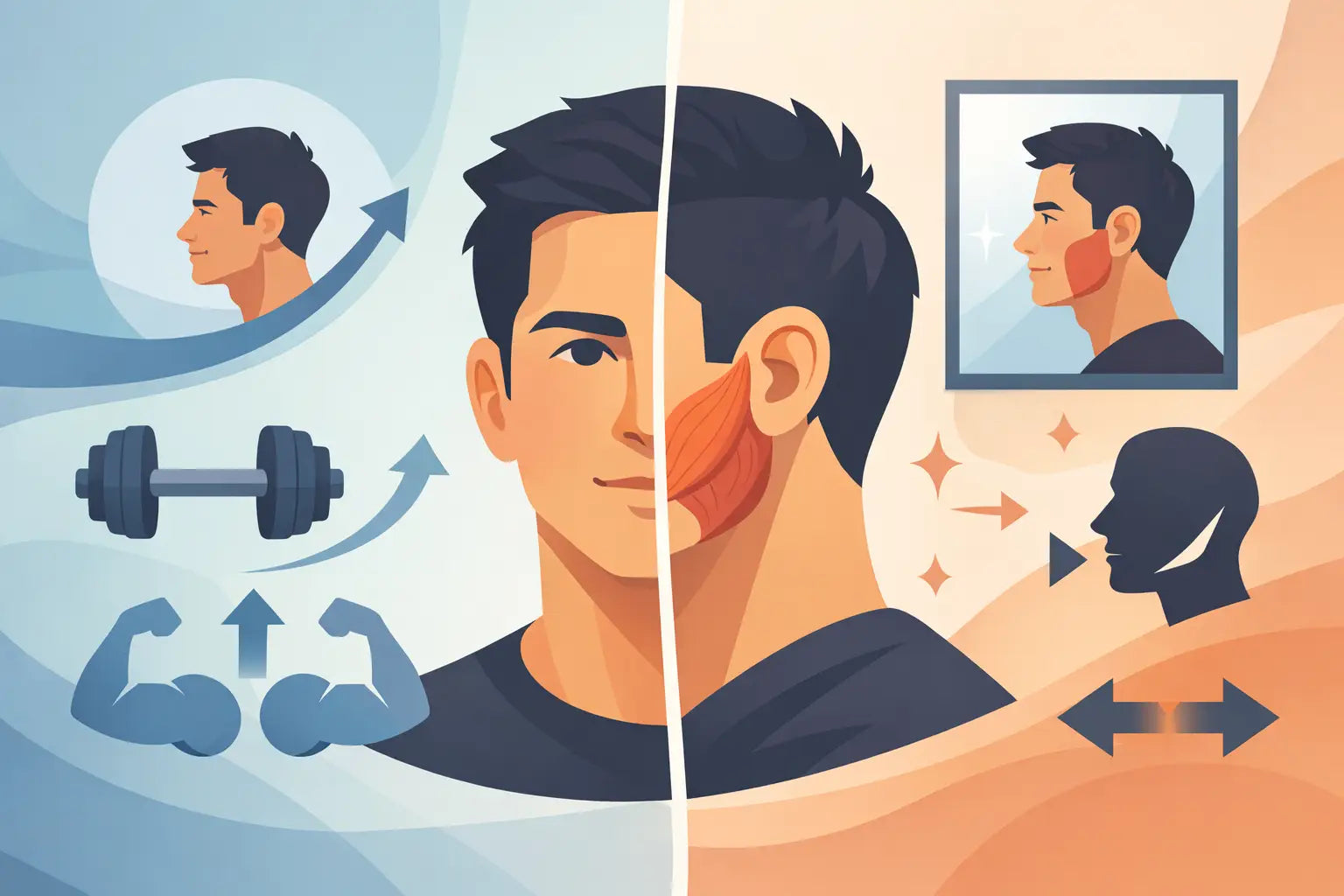


A sharper jawline is not built in a weekend. Your jawline transformation timeline depends on the same things that shape every visible fitness result: consistency, resistance, recovery, body composition, and your starting point. The goal is not to chase a temporary post-workout pump. It is to build a routine you can repeat long enough for stronger jaw muscles and better overall facial definition to show.
For some people, the first difference is a stronger feeling through the jaw within weeks. For others, visible change takes longer because facial structure, genetics, and body fat all affect what the mirror reveals. That does not make the work pointless. It means you need a realistic timeline, a controlled progression, and the discipline to stay with it.
Your Jawline Transformation Timeline, Week by Week
Weeks 1-2: Learn the movement and build the habit
The first two weeks are about control, not maximum resistance. You are teaching your masseter muscles to work through a deliberate, repeatable chewing pattern. Expect fatigue, especially if you have never trained your jaw directly. That feeling is normal muscle effort, but sharp pain, joint clicking, headaches, or soreness that does not settle are signs to stop and reassess.
This phase is where most people either create momentum or quit too soon. Keep sessions short and intentional. Ten focused minutes is more valuable than an aggressive session that leaves your jaw overworked for days. Treat it like the first week in the gym: technique first, ego later.
You may notice your jaw feels more engaged after training, and your face can look temporarily firmer due to the immediate muscle pump. Enjoy the motivation, but do not confuse that short-term effect with lasting structural change. Your real job is simply to show up again tomorrow.
Weeks 3-4: Stronger muscle awareness
By the third and fourth weeks, the routine should feel less foreign. Your chewing control improves, and you may be ready to progress gradually if your jaw and jaw joints feel comfortable. The right level of resistance should feel challenging without forcing you to clench, strain, or compensate with poor form.
This is also when people begin to pay closer attention to their profile, photos, and side angles. You may see subtle improvements in how the lower face looks when you are lean, well-rested, and holding good posture. However, lighting, hydration, and camera angles can create bigger day-to-day changes than muscle growth at this stage. Take progress photos in the same lighting and position every two to four weeks instead of judging every mirror check.
A stronger jaw routine works best alongside the basics that support a defined face: consistent sleep, hydration, resistance training for the rest of your body, and nutrition that supports your goals. Jaw exercise trains the muscle. It does not selectively remove facial fat or change your bone structure.
Weeks 5-8: Early visible progress for consistent users
This is the phase where consistency can begin to look like something. If you have trained steadily and progressed responsibly, your masseter muscles may feel noticeably stronger. Some users see a more substantial-looking lower face, especially if they already have a relatively lean facial profile.
The trade-off is simple: more resistance is not automatically better. Muscles need recovery, and the jaw joint is not a place to brute-force your way through discomfort. Add difficulty only when your current level feels controlled and manageable. If you are clenching your teeth, feeling joint pressure, or carrying soreness into meals, back off.
A structured tool can make progression easier than guessing with regular gum. JAWLINER uses beginner-to-expert resistance levels so your routine can move forward as your capacity builds, rather than asking you to start at an intensity your jaw is not prepared to handle. Progress should feel earned, not rushed.
Months 3-4: Definition becomes more measurable
At three to four months, committed training can create a clearer difference between your starting point and your current look. This is where side-by-side photos are more useful than memory. You may see stronger masseter development, more confidence in your profile, and a more disciplined grooming routine overall.
Results still vary. Someone with a naturally broad jaw and lower body fat may notice definition sooner than someone whose facial fat distribution softens the lower face. Neither person should use the other as a benchmark. Your face has its own structure, and your timeline should be measured against your own baseline.
If your goal includes a leaner-looking face, remember that overall body composition matters. There is no exercise that spot-reduces fat from the cheeks or beneath the chin. A sensible calorie deficit, if appropriate for your health and goals, plus regular full-body training can help reveal the muscle and structure you are working to enhance. Extreme dieting is not the answer. It can affect energy, recovery, and how your face looks in ways that are not always desirable.
Months 5-6 and beyond: Build a lasting routine
After several months, jaw training becomes less about chasing a dramatic weekly change and more about maintaining and advancing your results. This is the point where the fitness mindset matters most. You would not build stronger shoulders and then stop training them forever. The same principle applies here.
Use a sustainable schedule. Train with purpose, allow recovery, and move to higher resistance only when it makes sense. Some people do well with brief daily sessions; others need rest days to keep their jaw comfortable. Your ideal frequency depends on your current resistance level, your recovery, and whether you already deal with jaw tension from stress or nighttime grinding.
Long-term progress is also about presentation. Better posture can improve how your jaw and neck line appear. Keeping your head stacked over your shoulders instead of pushed forward changes your profile immediately, while stronger neck and upper-back habits support that position over time. Pair that with grooming choices that suit your face shape, and your effort can show more clearly.
What Can Speed Up or Slow Down Results?
The biggest accelerator is consistency. A moderate routine performed for months beats random intense sessions every time. Controlled resistance, proper recovery, and realistic expectations keep you in the game long enough to make progress visible.
Your starting anatomy also matters. Jaw exercise can strengthen and develop the muscles you train, but it cannot reshape skeletal bone, correct dental alignment, or replace medical treatment. If you have TMJ symptoms, jaw pain, loose teeth, recent dental work, an injury, or a history of jaw disorders, talk with a dentist or qualified healthcare professional before starting a resistance-based jaw routine.
Stress can slow you down too. Many people already clench or grind without realizing it, especially during sleep or demanding work periods. Adding intense jaw training on top of uncontrolled clenching can create more tension than progress. Separate training from stress habits: keep your workout deliberate, then let your jaw relax when you are not exercising.
How to Track Progress Without Fooling Yourself
The mirror is useful, but it is easily influenced by a pump, salt intake, sleep, facial hair, and lighting. Use the same front, three-quarter, and side photos at regular intervals. Keep your posture, camera height, and lighting similar. Then compare monthly, not daily.
Pay attention to performance as well. Can you use your current resistance with cleaner control? Does your jaw recover well between sessions? Has your routine become automatic? Those are real signs that your foundation is improving before every visual change becomes obvious.
The strongest transformation is not the one that appears overnight. It is the one built through controlled reps, patient progression, and a routine you can respect six months from now. Start where your jaw is today, train with intention, and give your consistency enough time to become visible.