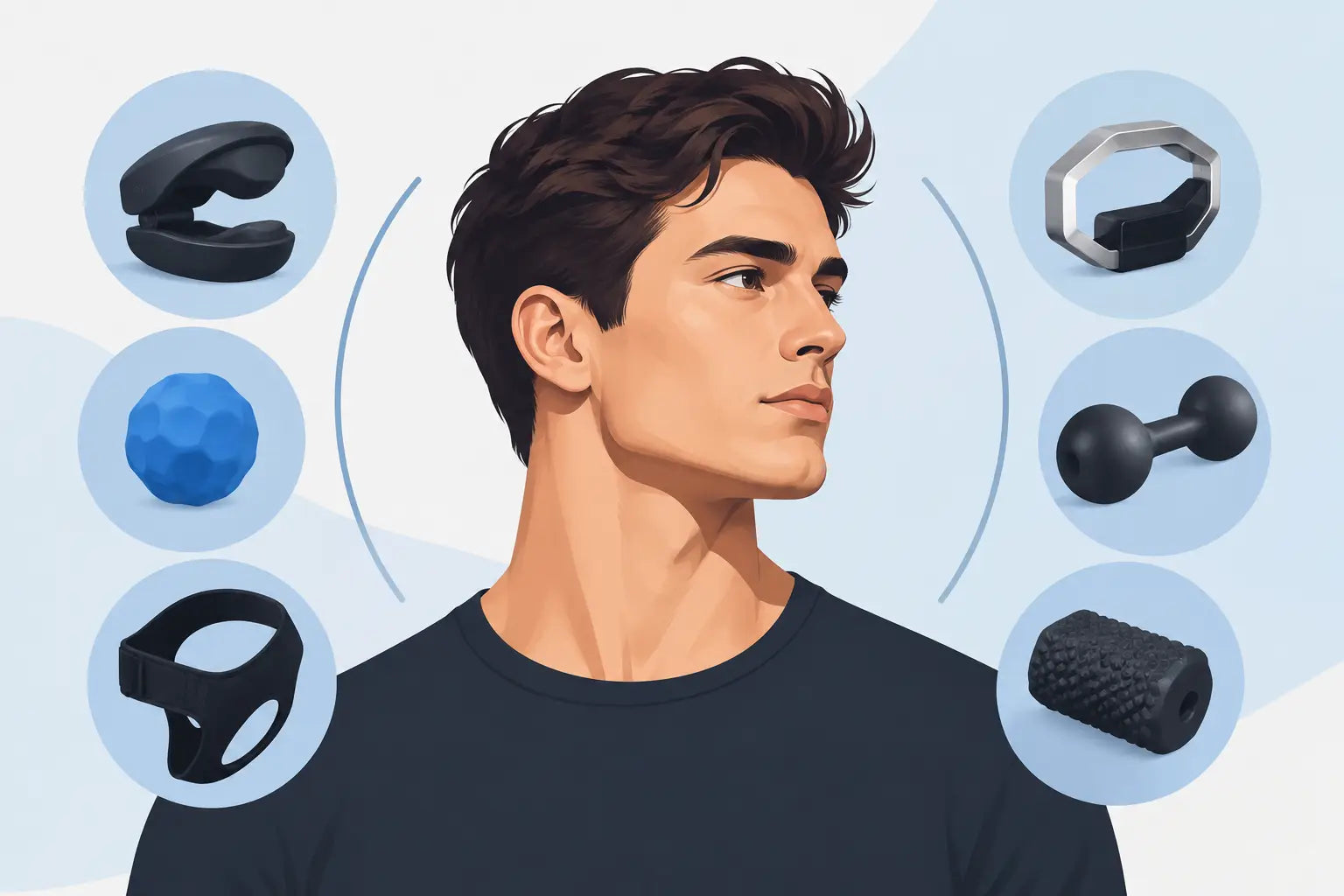


A sharper-looking jawline is not built by buying the hardest device on day one. It is built the same way visible progress is built in the gym: with the right resistance, consistent form, and enough recovery to keep training. This facial fitness device review breaks down what separates a purpose-built jaw trainer from ordinary gum, gimmicky beauty tools, and routines that ask too much from your jaw too soon.
For people who train their body, grooming and facial definition are part of the same standard. You want a routine that is quick, measurable, and easy to repeat. The best device is not necessarily the one that feels most extreme. It is the one you can use comfortably, progress through intentionally, and fit into your day without turning jaw training into a chore.
What a Facial Fitness Device Should Actually Do
A facial fitness device designed for jawline training uses resistance to engage the masseter muscles - the powerful muscles at the sides of your jaw that activate when you chew. The goal is straightforward: add controlled work to a muscle group that most people never train deliberately.
That distinction matters. A cold roller may temporarily change the look of puffiness. A gua sha tool can be part of a massage routine. Neither provides the repeated chewing resistance used to train the jaw muscles. Likewise, regular chewing gum is easy to find, but it is usually too soft and inconsistent to serve as a structured progression tool.
A dedicated jaw exerciser or resistance gum should give you a clear training stimulus while keeping the experience manageable. You should be able to tell where you are starting, what level you are using, and when it makes sense to move up. That is what turns a random habit into a facial fitness routine.
Facial Fitness Device Review: What Matters Most
The best way to evaluate a device is not by a dramatic before-and-after promise. Look at how it performs across the parts of training that determine whether you will actually stick with it.
Resistance that matches your current level
Resistance is the foundation. Too little resistance and the exercise may feel like ordinary chewing. Too much resistance and your jaw can fatigue fast, your technique can become uneven, and you may be tempted to overtrain.
Beginners should start with a softer option, even if they already lift weights or play sports. Your jaw is not your biceps. It is involved in talking, eating, and daily movement, so treating it like a muscle group that needs controlled progression is the smarter approach.
A quality system offers a true range, from beginner resistance through advanced options. This gives you a path forward instead of forcing you to guess whether a product is right for you. JAWLINER approaches this with beginner-to-expert resistance levels, allowing your routine to build as your jaw muscles adapt.
Comfort and usable shape
A device can be firm without being difficult to use. The material and shape should make it possible to maintain an even bite and chew with control. If it is too large for your mouth, slips around, has rough edges, or forces an awkward bite, you are less likely to use it consistently.
Comfort does not mean effortless. You should feel the resistance, especially as you progress. But discomfort, pinching, sharp pain, or joint irritation are not signs of a better workout. They are signs to stop, reassess your resistance level, and give your jaw a break.
Resistance gum has a different appeal. It can feel more natural for people who prefer a familiar chewing motion and want a portable option. A shaped exerciser may feel more focused and deliberate. Neither is automatically better. Choose the format that makes disciplined daily use easier for you.
A routine that fits real life
A facial fitness device earns its place in your routine when it does not demand an hour of your day. Short, controlled sessions are easier to repeat and easier to recover from. For many beginners, around 10 minutes is a practical starting point, provided the product directions and your comfort level support it.
The biggest mistake is trying to force fast results with marathon sessions. More chewing is not always better training. Muscles respond to a repeatable challenge, not reckless volume. Start conservatively, use the device as directed, and increase resistance or session length gradually rather than changing everything at once.
Consistency also means using both sides evenly. Favoring one side can reinforce habits you already have and make the training feel unbalanced. Keep your bite controlled, alternate sides if your format requires it, and avoid turning the session into aggressive clenching.
The Trade-Offs Most Reviews Skip
Jaw training tools are focused products. That is a strength, but it also means they are not a universal answer for every facial concern.
A device can help you build a disciplined muscle-training habit, but it cannot change your bone structure, replace dental care, or spot-reduce facial fat. Your overall facial appearance is influenced by genetics, body composition, hydration, posture, sleep, skin quality, and many other factors. If your goal is a more defined-looking profile, jaw resistance training is one piece of a wider self-improvement plan.
There is also an adjustment period. A new resistance level may leave your masseters feeling worked, much like a new lift can leave a muscle sore. Mild fatigue can happen. Persistent pain, clicking, locking, headaches, tooth pain, or discomfort around the jaw joint are different. Stop using the device and speak with a qualified dental or healthcare professional, especially if you have a history of TMJ issues, jaw injury, dental work, or bite concerns.
The honest review is this: a facial fitness device is most useful for someone who wants a structured, noninvasive way to train the jaw muscles and is willing to stay patient. It is less useful for someone looking for an overnight transformation or a substitute for addressing a medical or dental issue.
How to Build a Smarter Jawline Routine
Start with the lowest resistance that gives you noticeable but controlled effort. Use a short session and pay attention to how your jaw feels during training and later that day. If you feel normal fatigue and recover well, repeat that level consistently before moving up.
Progress should feel earned. When your current resistance no longer challenges you and your sessions remain comfortable, step up one level. Do not stack extra time, harder resistance, and more frequent sessions all at once. In any fitness program, changing one variable at a time makes it easier to understand what your body is responding to.
Pair the routine with habits that support your appearance goals. Train your body, prioritize sleep, keep your grooming sharp, and pay attention to posture. A stronger-looking jawline is not only about one product. It is about showing up with more intention in the details people see every day.
Who Gets the Most Value From a Jaw Trainer?
The ideal user is motivated by progress and appreciates a dedicated tool over vague advice. If you already track workouts, invest in grooming, or want a simple addition to your daily routine, resistance-based jaw training makes sense. It gives you an action you can repeat instead of endlessly analyzing angles in the mirror.
Beginners benefit most from an entry-level option and a clear progression plan. Advanced users benefit from having stronger resistance available once they have built tolerance and control. The product category works best when it treats your face with the same discipline you bring to the rest of your training.
Start where your jaw is today, not where you think it should be. Train with control, recover with purpose, and let consistency do the work that shortcuts never will.