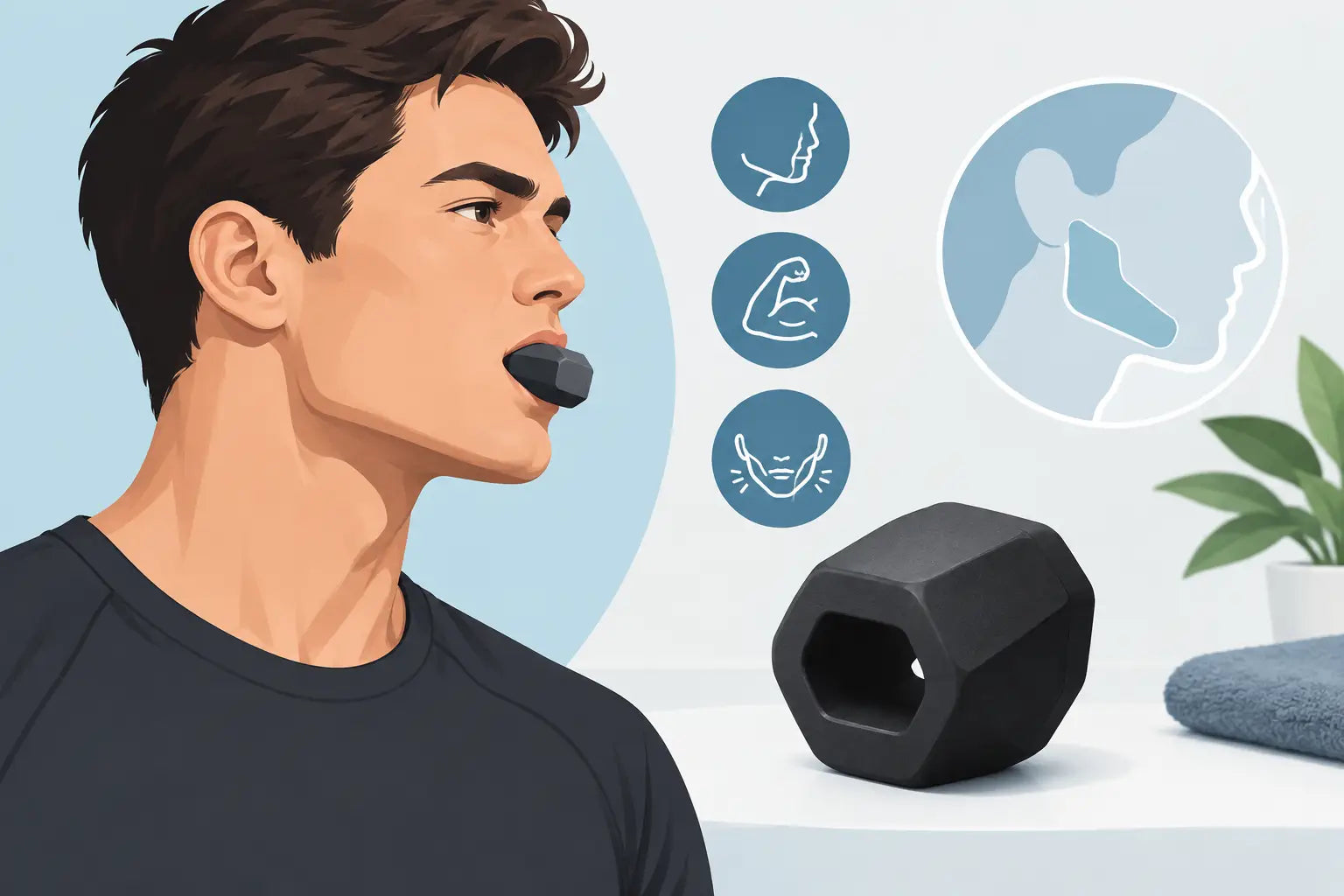


A stronger-looking jawline is built through consistency, not by forcing marathon chewing sessions. To choose safe chewing duration, treat jaw training like any other resistance routine: begin at a level your muscles can handle, pay attention to recovery, and progress only when your current workload feels controlled.
Your masseter muscles do work when you chew, but they are connected to a complex joint system. More time is not automatically more productive. The goal is purposeful resistance with enough restraint to keep your routine sustainable.
Why Safe Chewing Duration Matters
Jaw training should feel like training - focused effort, gradual adaptation, and a clear stop point. It should not turn into constant clenching, soreness that follows you through the day, or discomfort around your jaw joints.
Chewing duration matters because your jaw does not operate in isolation. Your teeth, gums, jaw joints, and surrounding facial muscles all take part in every repetition. A session that is too long, too hard, or too frequent can outpace your current tolerance, especially if you are new to resistance chewing or returning after a break.
The disciplined approach is simple: earn more time instead of assuming you need it. A short, controlled session performed regularly gives you a far better foundation than an aggressive first week followed by pain and a forced break.
How to Choose Safe Chewing Duration for Your Level
There is no single perfect number of minutes for every person. Your right duration depends on your chewing experience, the resistance level of the gum or exerciser, your recovery, and how your jaw feels outside the session.
If you are a beginner, start conservatively with the duration stated in your product guidance. Use a lower-resistance option and keep the session intentional. You should be able to chew with control, keep your face relaxed between repetitions, and finish without sharp pain or joint discomfort. Mild muscular fatigue can happen when you introduce a new training stimulus. Pain is not a progress signal.
As your routine becomes familiar, you can assess whether your current duration feels manageable. If you finish sessions comfortably, recover well, and have no lingering jaw tension, gradual progression may make sense. Change one variable at a time. Add a little duration or move to more resistance, rather than increasing both at once.
That distinction matters. Ten minutes with higher resistance can be more demanding than a longer period with a softer product. Duration is only one part of your training load. Resistance, chewing intensity, session frequency, and recovery days all count.
JAWLINER products are organized around beginner-to-expert resistance for a reason. Progressing through levels helps you create a more measured routine instead of guessing your way into an advanced workload before your jaw is ready.
Use Recovery as Your Reality Check
Your next day tells you a lot about whether a session was appropriate. Your jaw should feel normal or lightly worked, not stiff, locked, or painful while eating everyday foods. If you notice that you are unconsciously clenching, avoiding certain foods, or waking with more tension than usual, reduce the load.
Recovery also varies with the rest of your life. Stress can lead to nighttime grinding or daytime jaw clenching. A hard gym session, poor sleep, dental work, or a high-stress week may all make your jaw more sensitive. On those days, shortening your session or taking a day off is not losing momentum. It is intelligent training.
Build Your Chewing Routine in Stages
Start by making jaw training easy to repeat. Choose a consistent time when you are not rushed, such as after work or during a walk. Avoid chewing while distracted for long stretches, because it becomes harder to notice fatigue and easier to keep going past your planned endpoint.
For the first phase, focus on form and awareness. Chew evenly on both sides rather than loading one side of your mouth. Keep your shoulders down and avoid holding your teeth tightly together between chews. The goal is controlled movement, not aggressive grinding.
After several comfortable sessions, reassess. If there is no pain, no unusual tenderness, and no trouble opening and closing your mouth normally, you may be ready for a modest adjustment. Keep a simple mental record: resistance level, session length, and how your jaw felt later that day and the following morning. That is enough data to train with purpose.
A good progression feels almost boring. It is repeatable, controlled, and steady. The changes that last are usually built through weeks of smart practice, not one intense challenge session.
When Less Time Is the Better Move
Reduce your chewing duration when you increase resistance, restart after time off, or notice your jaw feels unusually tired. You should also be more cautious if you already grind your teeth, clench often, have sensitive teeth, or have recently had dental treatment.
Do not try to compensate for missed sessions with extra-long sessions. Muscles respond to training and recovery, not punishment. If your routine gets interrupted, return at a lower workload and build back up gradually.
If your main goal is facial definition, remember that chewing is one part of a bigger presentation. Sleep, hydration, body composition, posture, grooming, and confidence all influence how you show up. Jaw training works best as a focused habit inside a broader self-improvement routine, not as an excuse to overload your jaw.
Signs to Stop and Reset
A hard-working muscle may feel tired. Your jaw joint and teeth should not feel threatened. Stop the session and give yourself time to recover if you experience any of the following:
- Sharp pain in the jaw, teeth, gums, ear area, or temples
- Clicking, catching, locking, or a changed bite that does not quickly return to normal
- Headaches, facial pain, or soreness that persists or gets worse after rest
- Difficulty opening your mouth, chewing normal meals, or speaking comfortably
People with known temporomandibular joint concerns, active dental issues, recent oral surgery, braces or other orthodontic treatment should get individualized advice before starting resistance chewing. The strongest routine is the one that respects the condition of your mouth now, not the routine you wish you could do immediately.
Keep the Goal Clear
Safe chewing duration is not about finding the longest possible session. It is about finding the dose you can perform with solid control, recover from comfortably, and repeat as your strength develops. That is how you turn jaw training from a random habit into a real routine.
Start with the level you can own today. Pay attention to your body, progress with patience, and let consistency do the heavy lifting toward a sharper, more confident profile.