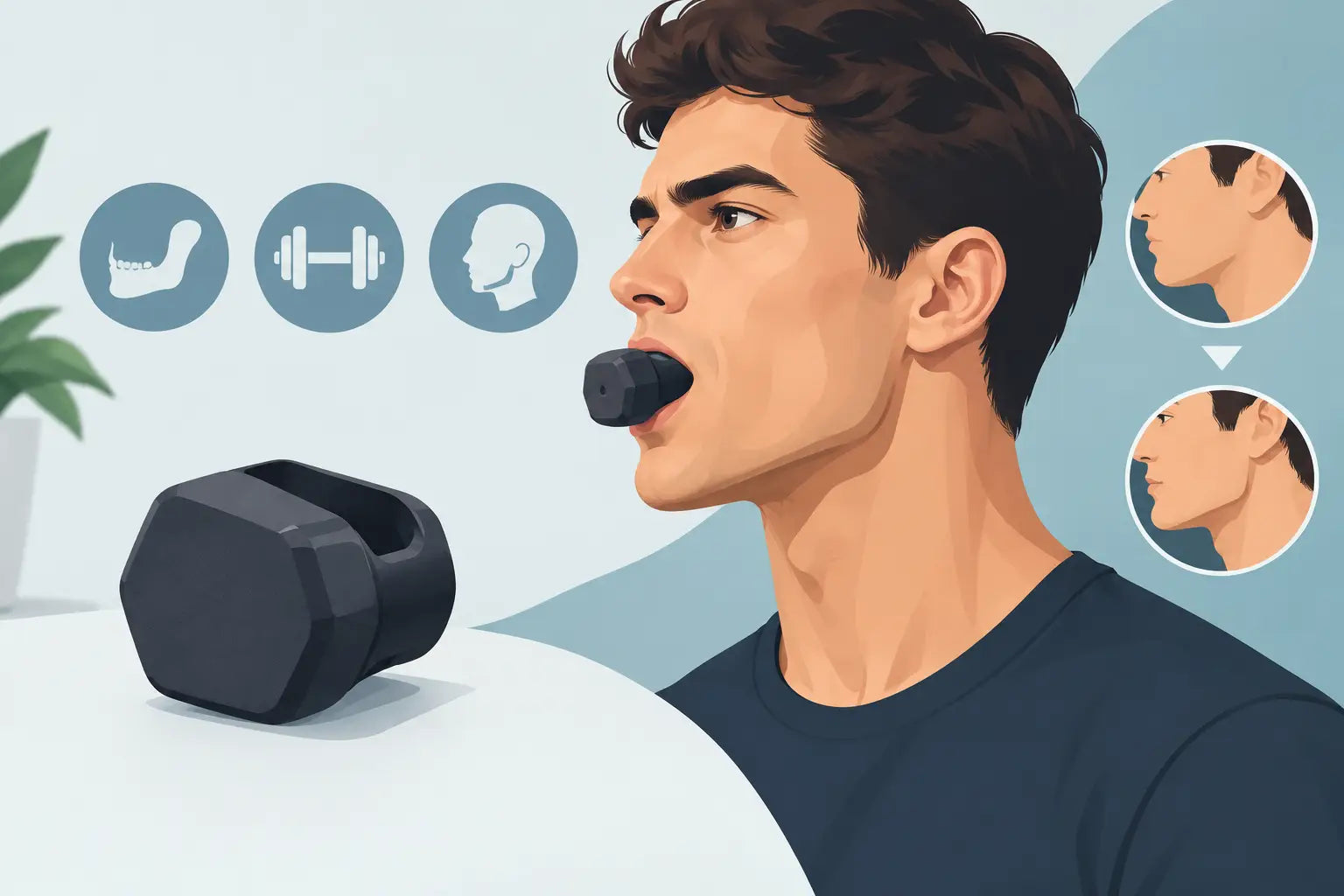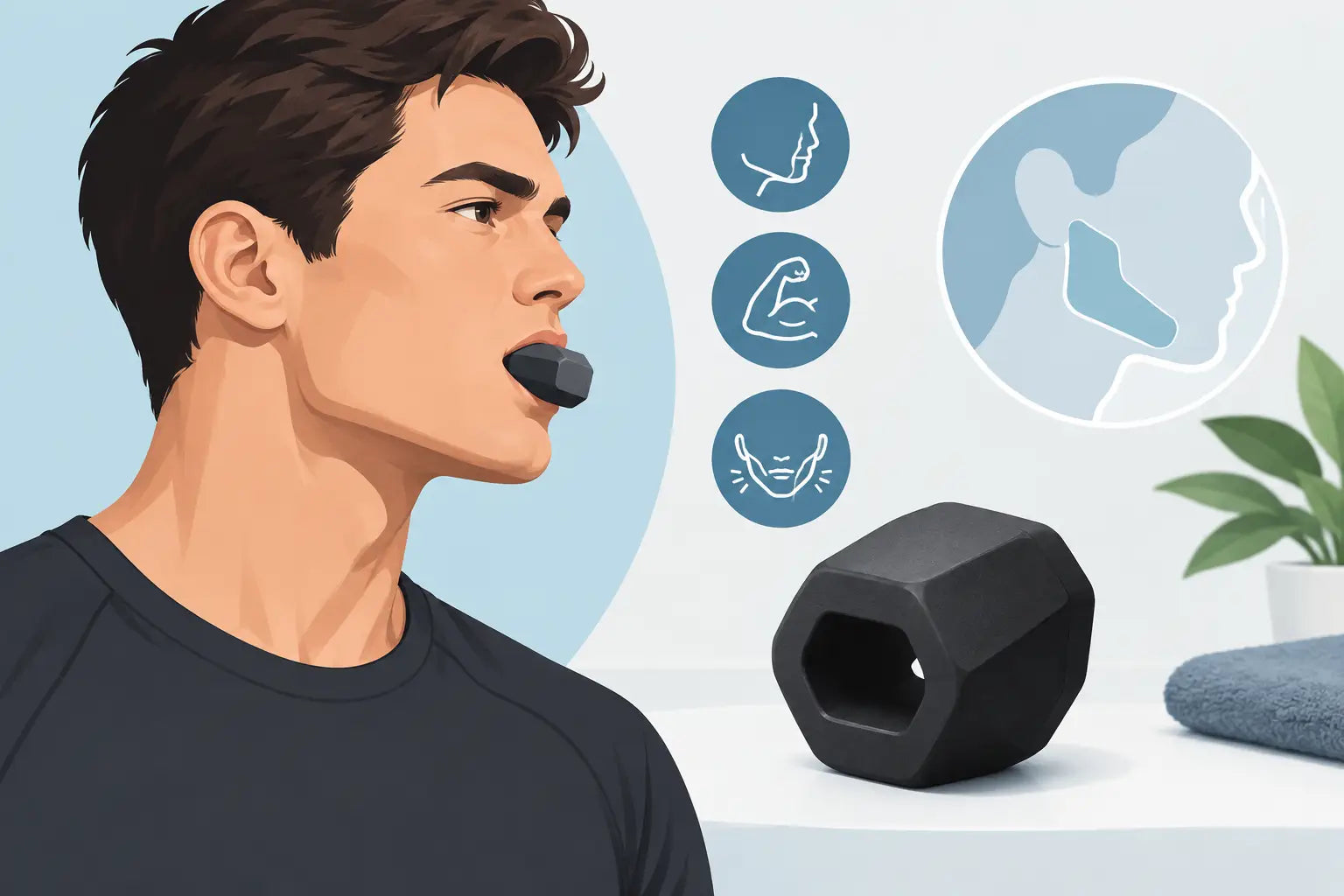


A hard jaw session can feel productive in the moment. But if your masseters are still aching when you eat breakfast the next day, you did not prove discipline - you probably gave your jaw more work than it could recover from. To avoid jaw workout soreness, train your face the way you would train any other muscle group: use the right resistance, control the volume, and give recovery the respect it deserves.
A stronger-looking, more defined jawline is built through consistency. Trying to force results with long, aggressive chewing sessions usually works against that goal. The better move is to start controlled, progress with intention, and stay alert to what your jaw is telling you.
Why Your Jaw Gets Sore After a Workout
Your masseter muscles are powerful. They help you chew, speak, and stabilize your bite throughout the day, so they are already active before a dedicated workout begins. Add resistance gum or a jaw exerciser too quickly, and those muscles can experience the same temporary post-training soreness you might feel after a tough leg or shoulder session.
Mild muscle fatigue or tenderness can happen when you introduce a new training stimulus or increase resistance. That is different from sharp pain, joint discomfort, headaches, clicking, locking, or pain that changes the way you bite. Those symptoms are not a cue to push harder. Stop training and speak with a dentist or qualified healthcare professional, especially if symptoms persist.
The goal is not to make every session brutal. The goal is to create enough challenge to build a repeatable routine without overwhelming your muscles or jaw joints.
How to Avoid Jaw Workout Soreness From Day One
The fastest way to derail a new routine is to begin at an expert level because you want expert-level results. Facial training rewards patience. Start with a resistance level you can control comfortably and a session short enough that your jaw still feels normal afterward.
For beginners, that may mean just a few minutes of gentle, even chewing rather than a full-length session. Pay attention to how you feel later that day and the following morning. If there is no lingering tenderness or joint discomfort, you can gradually add time over the next several sessions.
Treat resistance, session length, and frequency as three separate levers. Do not increase all three at once. If you move to firmer gum or a stronger exerciser, keep the session shorter at first. If you add another training day, keep your usual resistance and duration steady. Small changes let you identify what your jaw tolerates well.
Keep Both Sides Working Evenly
Chewing only on your favorite side may feel natural, but it can leave one masseter doing more work than the other. That imbalance can contribute to uneven fatigue and make your jaw feel tight after training.
If you use resistance gum, switch sides regularly and deliberately. With a purpose-built exerciser, follow its intended placement and use controlled, symmetrical bites rather than twisting or shifting your jaw to chase a harder sensation. Clean reps beat aggressive reps.
Do Not Turn a Workout Into All-Day Chewing
Resistance gum is training equipment, not a challenge to keep in your mouth for hours. More total chewing is not automatically better, especially when you are still adapting. Your jaw also works while you eat, talk, and clench during stressful moments. Those daily demands count.
Set a defined session, finish it, and move on with your day. This gives your muscles a clear training signal and a clear recovery window. It also makes progress easier to track because you know exactly how much work you performed.
Build a Recovery-First Jaw Training Schedule
A good routine should leave you motivated to train again, not nervous about your next bite. Most new users do better with spaced sessions instead of daily high-resistance work. Think of the first couple of weeks as an adaptation phase, not a test of willpower.
Start with short sessions on nonconsecutive days. If your jaw feels normal between sessions, gradually build toward the routine that fits your product level, comfort, and goals. Some people recover quickly; others need more time, particularly if they already grind their teeth, clench under stress, or have a history of jaw sensitivity.
A simple progression can look like this:
- Begin with light resistance and brief sessions.
- Keep that level stable until it feels controlled and comfortable.
- Add a small amount of time or resistance, not both.
- Take an extra rest day whenever soreness lingers.
Small Habits That Reduce Post-Workout Tightness
Your training session is only part of the equation. What happens around it can determine whether mild fatigue settles quickly or turns into an irritated, overworked feeling.
Before you start, take a few relaxed breaths and let your teeth separate. Many people carry unconscious tension in their jaw all day, then add a workout on top of it. Beginning from a relaxed position helps you avoid turning every repetition into a full-force clench.
During the session, use a steady rhythm. Avoid rapid, hard bites and avoid forcing your teeth together as tightly as possible. Resistance should come from the product and the muscle's controlled effort, not from grinding your teeth. Keep your neck and shoulders relaxed too. Tension there can make your whole face feel tighter.
Afterward, let the jaw rest. Choose softer foods if chewing feels tiring, drink water, and skip extra gum for the day. A warm compress may feel soothing for temporary muscle tightness, but it is not permission to train through pain. The real recovery tool is reducing the workload when your body asks for it.
Sleep matters as well. If you wake with a sore jaw before you have trained, nighttime clenching or grinding may be part of the picture. Adding intense resistance work without addressing that pattern can make soreness worse. A dentist can help assess persistent grinding, bite issues, or jaw-joint concerns.
Know the Difference Between Muscle Fatigue and a Red Flag
Mild, even muscle tiredness in the cheeks or along the sides of the jaw can be a normal response to a new workout. It should improve with rest and should not interfere much with speaking, eating, or opening your mouth.
Stop your routine and get professional guidance if you experience sharp pain, swelling, popping with pain, a locked jaw, reduced ability to open your mouth, numbness, tooth pain, or a change in your bite. The same applies if soreness keeps returning despite lighter sessions and more rest. Jaw training is not appropriate for everyone, particularly people with certain temporomandibular joint conditions, active dental problems, or recent dental work unless their dental professional says otherwise.
There is no prize for ignoring those signs. Facial definition is a long-game goal, and protecting your jaw function comes first.
Progress Comes From Control, Not Punishment
The best jaw routine is the one you can repeat week after week with clean form, manageable recovery, and confidence. If you are sore, reduce something: the resistance, the duration, the frequency, or all three. Then build again from a level that feels sustainable.
Train with intention, not impatience. A controlled session today gives you a better chance of showing up strong tomorrow - and that consistency is where real progress starts.