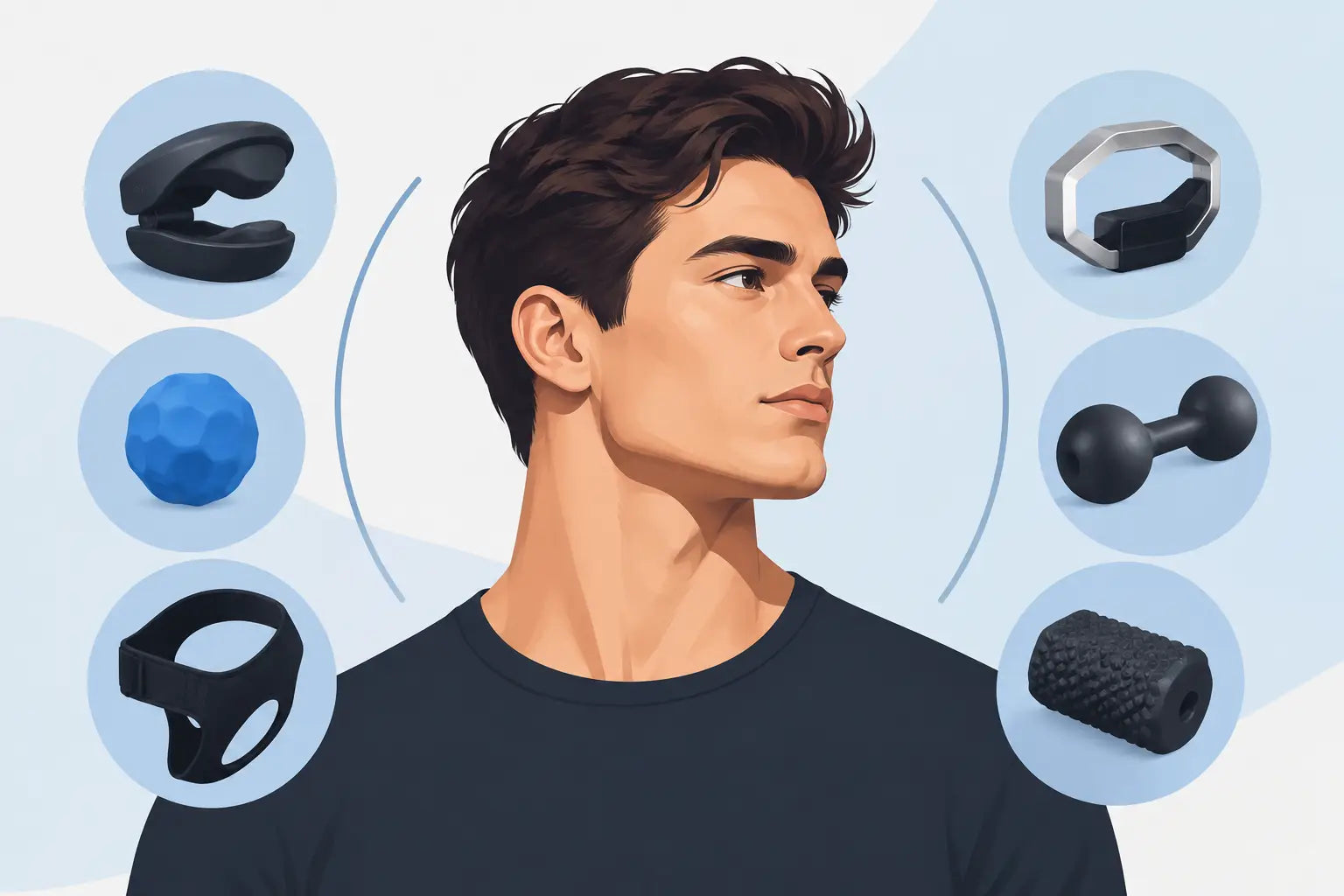


A jaw exerciser review should answer more than one question: Is the product hard to chew? It should tell you whether the resistance fits your current level, whether the routine is realistic enough to repeat, and what kind of change you can reasonably pursue. A stronger-looking jawline is built through consistent effort, not by crushing the hardest device you can find on day one.
For people who already train their body, the appeal is obvious. Your masseter muscles are muscles. Controlled resistance can challenge them, and a focused routine can make jaw training feel as deliberate as any other part of your appearance routine. The key is to train with progression, patience, and enough awareness to know when to stop.
Jaw Exerciser Review: What Actually Matters
Not all jaw-training products create the same experience. Some are designed to be chewed like gum, while others use compact resistance pieces that you bite in controlled repetitions. Neither format is automatically better. Your best option depends on whether you want a casual daily habit, a more defined training session, or both.
The first thing to assess is resistance. A product that feels challenging but controllable is more useful than one that forces your jaw to strain. Beginners often make the mistake of choosing maximum hardness because they want maximum results. That is not how smart training works. If you cannot chew with smooth, even control, the resistance is too high for your starting point.
Material and shape matter too. A purpose-built exerciser should feel stable between the teeth and allow a natural bite pattern without sharp edges or awkward shifting. With resistance gum, flavor and texture matter because you are more likely to finish regular sessions when the experience is enjoyable. The product only works as part of your routine if it is one you will actually use.
Finally, look for a clear path forward. The most useful jaw exercisers are not treated as one-size-fits-all gadgets. They give you a way to begin at a manageable level and increase difficulty as your jaw adapts. That progression is what turns a quick experiment into a disciplined facial fitness habit.
What Results Can You Expect?
Jaw exercise can strengthen the muscles involved in chewing, especially the masseters at the sides of the jaw. For some people, building those muscles can support a fuller, more pronounced lower-face appearance over time. The effect varies. Your starting facial structure, body-fat level, genetics, posture, consistency, and overall lifestyle all influence what you see in the mirror.
That is the honest part of any jaw exerciser review: no resistance product can redesign your bone structure or promise the same visual outcome for everyone. It is a training tool, not a shortcut. But for someone pursuing a sharper, stronger-looking facial profile, it can be a practical addition to grooming, fitness, and confidence-building habits.
Visible change also moves slower than social media might suggest. You may notice that your jaw feels more engaged or that chewing becomes easier before you see a meaningful visual difference. Treat those early signs as proof that you are building a routine, not as a reason to immediately double your workload.
Consistency beats intensity. Ten focused minutes a day, or a few measured sessions each week depending on the product and your comfort, is more valuable than an aggressive session followed by days of soreness. The goal is not to exhaust your jaw. The goal is to train it with control long enough to build momentum.
The role of overall leanness
A more defined jawline is partly about muscle and partly about visibility. If your goal is a chiseled look, your broader fitness habits still matter. Sleep, hydration, nutrition, stress management, and maintaining a healthy body composition can all affect how much facial definition shows.
That does not make jaw training pointless. It puts it in the right category. Think of it as one targeted piece of a larger appearance routine, much like training shoulders to improve your silhouette or maintaining a haircut that frames your face better.
Choosing the Right Resistance Level
The right starting level should feel like real work without producing pain, joint pressure, or an uncontrolled bite. If you are new to facial fitness, begin with beginner resistance even if you train heavily in the gym. Your jaw has its own adaptation curve.
Once you can complete your normal sessions with steady form and no lingering discomfort, you can consider moving up. A gradual increase lets you maintain quality repetitions while asking more from the muscle. Rushing from beginner to expert resistance is usually a confidence move, not a training strategy.
JAWLINER approaches this with beginner-through-expert exerciser options and progressively resistant chewing gum, giving users a simple route from first session to more demanding work. The point of a tiered system is not to make the routine complicated. It is to give your jawline training a direction.
A practical progression looks like this: establish a comfortable habit first, increase resistance only when your current level feels controlled, then keep your sessions consistent long enough to judge whether the next step is warranted. If a stronger level causes clicking, pain, headaches, or lasting tenderness, step back. More resistance is only useful when you can handle it well.
How to Use a Jaw Exerciser Without Overdoing It
Training your jaw should feel deliberate, not reckless. Sit or stand with your neck relaxed and your head in a neutral position. Place the exerciser as directed, bite down with measured pressure, then release under control. Avoid clenching as hard as possible or speeding through repetitions just to finish.
For resistance gum, chew evenly rather than loading one side of your mouth. Switching sides can help you avoid turning the session into a one-sided habit. For bite-style exercisers, follow the product-specific use directions and keep the movement smooth.
Give your jaw recovery time. It is easy to underestimate fatigue because jaw training is convenient and takes only minutes. But convenience does not mean unlimited volume. If your jaw feels unusually tired, take a rest day or reduce the session length. Progress comes from repeated, recoverable training.
When jaw training is not the right move
Do not push through pain. If you have jaw clicking, locking, frequent headaches, tooth pain, a diagnosed temporomandibular joint condition, recent dental work, braces, implants, or other oral-health concerns, speak with a qualified dental or healthcare professional before starting. A jaw exerciser is intended for controlled muscle training, not for treating medical conditions.
Stop using the product if it causes pain, numbness, sharp discomfort, or symptoms that persist after your session. A better jawline is never worth ignoring a signal from your body.
Is a Jaw Exerciser Worth It?
A jaw exerciser is worth considering if you want a low-friction way to train your masseters and you are willing to stay consistent. It suits people who enjoy measurable self-improvement: start at an appropriate level, build a habit, progress resistance, and evaluate changes over time.
It may not be the right purchase if you expect instant facial transformation, dislike repetitive routines, or have existing jaw concerns that make chewing resistance uncomfortable. Be honest about your goal. If you want a structured tool to support a more defined-looking profile, it has a clear place in your routine. If you want a guaranteed new face in a week, no product can deliver that.
The strongest approach is simple: start where you are, train with control, and let consistency earn the progression. Your jawline routine does not need to be extreme to become a serious part of how you show up.