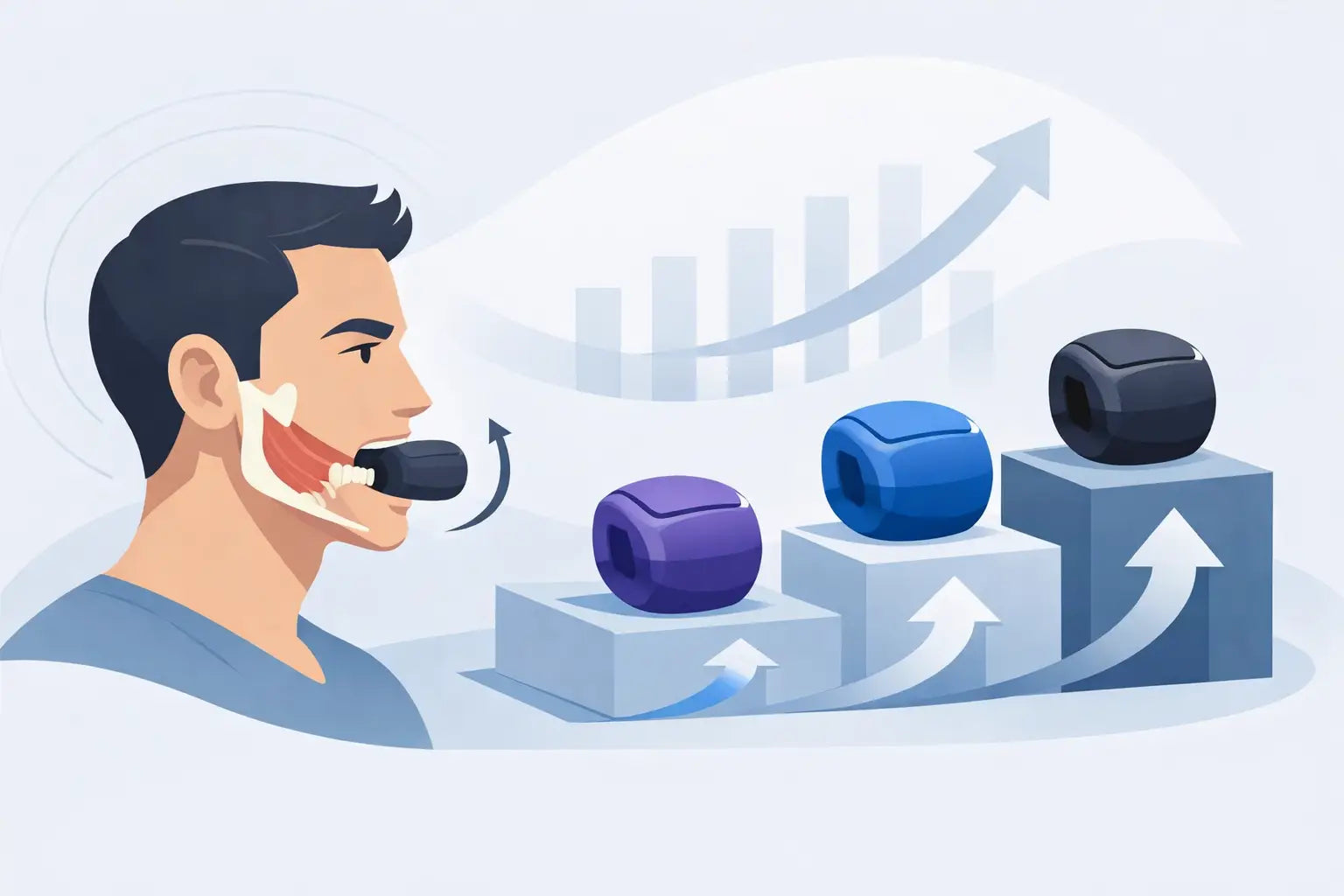


Your jaw exerciser goes in your mouth, works hard under pressure, and deserves more than a quick rinse when you are done. Knowing how to clean a jaw exerciser properly keeps your training routine fresh, protects the material, and makes it easier to stay consistent with your daily sets.
Think of it like any piece of fitness equipment that comes into close contact with your body. You would not leave a sweaty mouthguard, shaker lid, or gym towel unwashed for days. Your jaw training tool should get the same disciplined treatment.
How to Clean a Jaw Exerciser After Every Session
The best time to clean your jaw exerciser is immediately after use. Saliva can dry on the surface, leaving behind residue that is harder to remove later. A fast post-workout clean takes less than a minute and helps keep your device ready for tomorrow's session.
Start by washing your hands. Then rinse the exerciser under cool or lukewarm running water. Avoid very hot water unless the product's specific care instructions say it is safe. High heat can affect the shape, firmness, or surface of some training materials over time.
Add a small drop of mild, fragrance-free dish soap to your clean fingertips or a soft toothbrush reserved only for this purpose. Gently work around the full surface, including bite grooves, edges, seams, and any textured areas where residue can sit. Do not scrub aggressively. The goal is to remove buildup, not wear down the material.
Rinse thoroughly until there is no soap left. Soap residue can leave an unpleasant taste and may irritate your mouth during the next workout. Shake off excess water, then pat the exerciser dry with a clean, lint-free towel.
Let it air-dry completely before putting it back in a case or closed container. Trapping moisture is the fastest way to create an unpleasant odor. Place it on a clean towel in a well-ventilated spot, away from direct sunlight and heat sources.
Why a Quick Rinse Is Not Always Enough
A rinse is better than nothing, especially when you are traveling or rushing out the door. But water alone does not reliably remove the oils, saliva film, and tiny particles that can collect after repeated chewing sessions.
Your jawline routine is built on repetition. Ten focused minutes a day can add up, which means your exerciser gets regular exposure to your mouth. A gentle soap wash after each session is the simple standard that supports clean, comfortable training.
This matters even more if you use your jaw exerciser after eating, drinking coffee, taking pre-workout, or using flavored gum. Those residues can cling to the device and create a stale taste over time. Training with a clean tool feels better and keeps your routine from becoming something you put off.
Give It a Deeper Clean Once a Week
Daily washing handles the basics. A weekly deeper clean gives you a chance to inspect the exerciser closely and remove buildup from areas you may miss during a quick wash.
Fill a clean bowl with lukewarm water and a small amount of mild dish soap. Let the exerciser sit briefly, then clean it gently with your fingers or a soft brush. Keep the soak short. Extended soaking is unnecessary, and different materials respond differently to water exposure.
Rinse it carefully and dry it completely. While you are cleaning, inspect every side under good light. Look for cracks, deep grooves, tears, sticky patches, discoloration, or changes in texture. Resistance training puts repeated force on your device. If it looks damaged or feels different in a way that concerns you, stop using it and replace it.
A deep clean is also the right time to wash the storage case, if you use one. Wipe it out with mild soap and water, rinse if appropriate, and let it dry fully before placing your exerciser inside. A clean device stored in a dirty, damp case will not stay fresh for long.
What Not to Use on Your Jaw Exerciser
Strong cleaners may sound more effective, but they can be a bad trade-off for an item you put in your mouth. Avoid bleach, harsh disinfectant sprays, abrasive scouring powders, and heavily scented cleaning products. These can leave residue, damage the surface, or create flavors you do not want during a set.
Do not use alcohol-based cleaners unless the product instructions specifically approve them. Alcohol can be too aggressive for certain materials and may dry out or weaken them over time. The same goes for hydrogen peroxide, vinegar, and essential oils. Household hacks are not automatically mouth-safe or material-safe.
Skip the dishwasher and microwave unless your exact product is clearly labeled for those methods. Dishwashers expose items to high temperatures and strong detergents. Microwaving can warp or ruin a resistance device quickly. Boiling water is another method to avoid unless the manufacturer's directions explicitly say otherwise.
For a JAWLINER 3.0 jaw exerciser or any resistance tool, always prioritize the care guidance that comes with your specific model. Product materials and construction can vary, and the safest cleaning method is the one designed for that device.
Store It Like Part of Your Training Gear
Clean storage is not an afterthought. It is part of the routine. Once your jaw exerciser is fully dry, keep it in a clean protective case or a dedicated container. Do not toss it loose into a gym bag, pocket, car console, or bathroom counter where it can collect lint, dust, bacteria, or leftover moisture.
Avoid leaving it in direct sun, near a radiator, or inside a hot car. Heat can affect the consistency and lifespan of many training materials. Keep it in a cool, dry location instead.
If you train on the go, bring a small clean case and a travel-size bottle of mild soap when practical. At minimum, rinse the device after use, dry it as well as possible, and give it a full wash when you get home. Do not seal a wet exerciser inside an airtight container for hours.
When You Should Replace Your Jaw Exerciser
Cleaning extends the usable life of your training tool, but it does not make worn equipment new again. Replace your jaw exerciser if it develops visible damage, persistent odor after proper cleaning, a rough or sticky surface, or any change that makes it uncomfortable to use.
You should also replace it if someone else has used it. Jaw exercisers are personal equipment, not something to share with training partners, friends, or family. Even if it looks clean, sharing creates an unnecessary hygiene risk.
If you have been sick, especially with a mouth, throat, or respiratory infection, consider replacing the device once you recover or follow the specific product care guidance. This is one area where being cautious is smarter than trying to stretch the life of a tool.
Keep Your Routine Clean and Consistent
The strongest routines are the ones with no friction. Set your jaw exerciser near the sink after each session, wash it before you move on with your day, and return it to its case only when it is dry. That simple habit protects the tool you rely on to train your jaw muscles and pursue sharper facial definition.
Clean gear makes it easier to show up tomorrow. Treat those sixty seconds of care as part of the workout, not a chore after it.