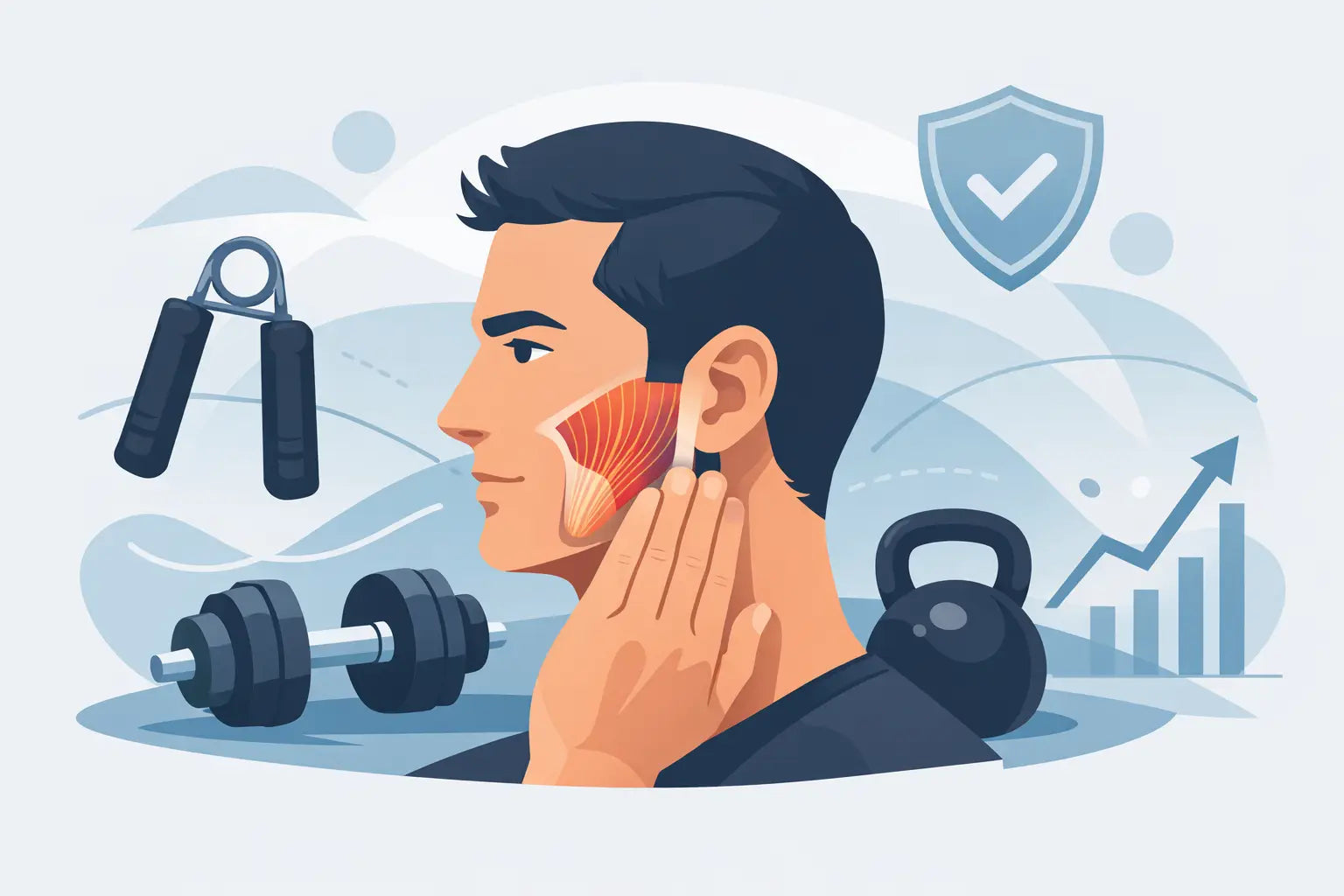


A sharp profile does not come from one lucky photo angle. Jawline aesthetics are the result of how your jaw muscles, facial structure, body composition, posture, and daily habits work together. Some factors are fixed, but the way you train, carry yourself, and stay consistent can change how defined your lower face looks over time.
The goal is not to chase an unrealistic filter. It is to build a stronger-looking, more intentional facial profile through the same mindset you bring to the gym: use the right resistance, train with control, recover properly, and stay patient enough to see progression.
What Shapes Jawline Aesthetics?
Your jawline is more than the edge of your mandible. Its visible shape is influenced by the masseter muscles at the sides of the jaw, the amount and distribution of facial fat, chin projection, neck posture, skin quality, and your individual bone structure. That is why two people can follow the same routine and see different results.
Bone structure sets the foundation. In adults, chewing exercises will not reshape the jawbone itself. What resistance training can target is the muscular component of the lower face. Building and conditioning the masseters may contribute to a fuller, stronger-looking jaw area, especially when paired with healthy body composition and solid posture.
This is the honest trade-off: there is no isolated exercise that burns fat from the face alone. If facial fullness is masking your jawline, overall nutrition, activity, sleep, and stress management matter alongside jaw training. If you are already lean, building a more developed lower-face musculature may be the more relevant focus.
Train the Masseters Like a Muscle Group
The masseters are powerful chewing muscles. They respond to resistance, but that does not mean more force is always better. Randomly clenching all day or jumping straight into the hardest chewing resistance is not disciplined training. It is a fast way to create unnecessary discomfort and quit the routine.
A better approach is progressive overload. Start with resistance you can use with controlled, comfortable chewing. Keep sessions short, then increase resistance or duration only when your jaw feels adapted. The objective is repeatable training, not proving how hard you can bite on day one.
A beginner can start with about 10 minutes of focused chewing per day, divided between both sides of the mouth. Keep the movement even and controlled. Avoid favoring one side, rushing through reps, or turning every session into an all-out effort. Consistency gives your jaw muscles a reason to adapt.
As your conditioning improves, stronger gum or a progressively resistant jaw exerciser can create a clearer training path. Purpose-built options such as JAWLINER make it easier to move from beginner resistance toward more demanding levels without guessing whether your routine is actually progressing.
Progress Without Overdoing It
Your jaw is involved in eating, talking, and many unconscious movements throughout the day. Unlike a bicep workout, you cannot completely rest it after training. That makes intelligent progression especially valuable.
Use a simple rule: if you can finish your sessions comfortably and your jaw feels normal the next day, maintain that level until it feels easy. Then make one adjustment at a time. Increase the resistance, add a few minutes, or add another training day. Do not change everything at once.
A stronger jawline routine should feel challenging in the muscles, not painful in the joint. Muscle fatigue is one thing. Clicking, sharp pain, headaches, tooth pain, locking, or persistent soreness are signals to stop and reassess. Anyone with jaw joint concerns, dental issues, braces, recent dental work, or a history of TMJ symptoms should speak with a qualified dental or medical professional before beginning resistance-based jaw training.
Body Composition Changes the Frame
You can have strong jaw muscles and still not see the definition you want if body fat, water retention, or facial puffiness is softening the area. This is not a reason to chase extreme dieting. It is a reason to look at your jawline as part of your full appearance and fitness routine.
A balanced diet, regular strength training, cardio or daily movement, hydration, and enough sleep can all support a leaner, less puffy appearance. Sodium, alcohol, poor sleep, and stress may temporarily make the face look fuller for some people. That does not mean you failed your routine. It means your appearance can fluctuate from day to day.
Focus on trends rather than checking the mirror every hour. Take progress photos in the same lighting, at the same angle, and at the same time of day every few weeks. Side-profile photos are often more useful than a front-facing selfie because they show changes in the jaw-to-neck transition more clearly.
Posture Can Improve Your Profile Right Away
Forward-head posture can blur the appearance of the jaw and neck, even when you are lean. If your head is constantly pushed forward toward a phone or laptop, the tissues beneath the chin compress and your profile can look softer than it actually is.
Bring your screen closer to eye level, keep your shoulders stacked instead of rounded, and practice a neutral head position. Think tall through the neck rather than aggressively forcing your chin upward. Better posture will not replace muscle development or body-composition work, but it can make your existing structure show up more confidently.
Tongue posture also gets plenty of attention in jawline conversations. Keeping the tongue resting comfortably against the roof of the mouth, lips closed, and teeth relaxed may support better oral posture for some people. It should not involve forceful clenching or constant tension. A relaxed, repeatable position beats obsessive effort.
Build a Routine You Will Actually Keep
Jawline aesthetics reward routines that are simple enough to survive busy weeks. A complicated protocol with too many exercises usually loses to 10 focused minutes performed consistently.
Start by choosing a resistance level that matches your experience. Train at a regular time, such as after work, during a walk, or while preparing for the day. Pair it with an existing habit so it becomes automatic. Then track the basics: resistance level, session length, comfort, and a monthly progress photo.
Your routine does not need to dominate your day. It needs to be intentional. Train both sides evenly, use progressive resistance, and give yourself recovery when your jaw feels fatigued. If one day gets missed, resume the next day instead of turning a small lapse into a stopped routine.
Avoid the Habits That Work Against Definition
A more defined-looking lower face is easier to pursue when you avoid common mistakes. Constant gum chewing without a plan can create uneven training volume. Over-clenching can add strain without creating better results. Starting with expert-level resistance can turn a promising habit into jaw soreness.
Also avoid judging your progress against edited photos, dramatic lighting, or people with entirely different genetics. Jawline aesthetics are personal. Your strongest result is the version of your face that looks more defined, balanced, and confident without pretending to be someone else.
Facial hair, grooming, hairstyle, and photo angles can also influence how your jawline reads. A clean beard line or shorter sides can emphasize the lower face, while strong overhead lighting may create shadows that exaggerate definition. These tools are not substitutes for training, but they can help you present the progress you are building.
The Stronger-Looking Jawline Comes From Repetition
Results rarely arrive after a few aggressive sessions. They come from the quieter work: controlled resistance, balanced chewing, better posture, consistent training, and patience with your own structure. Treat your jawline like any other aesthetic goal. Build the habit first, then let the definition follow.