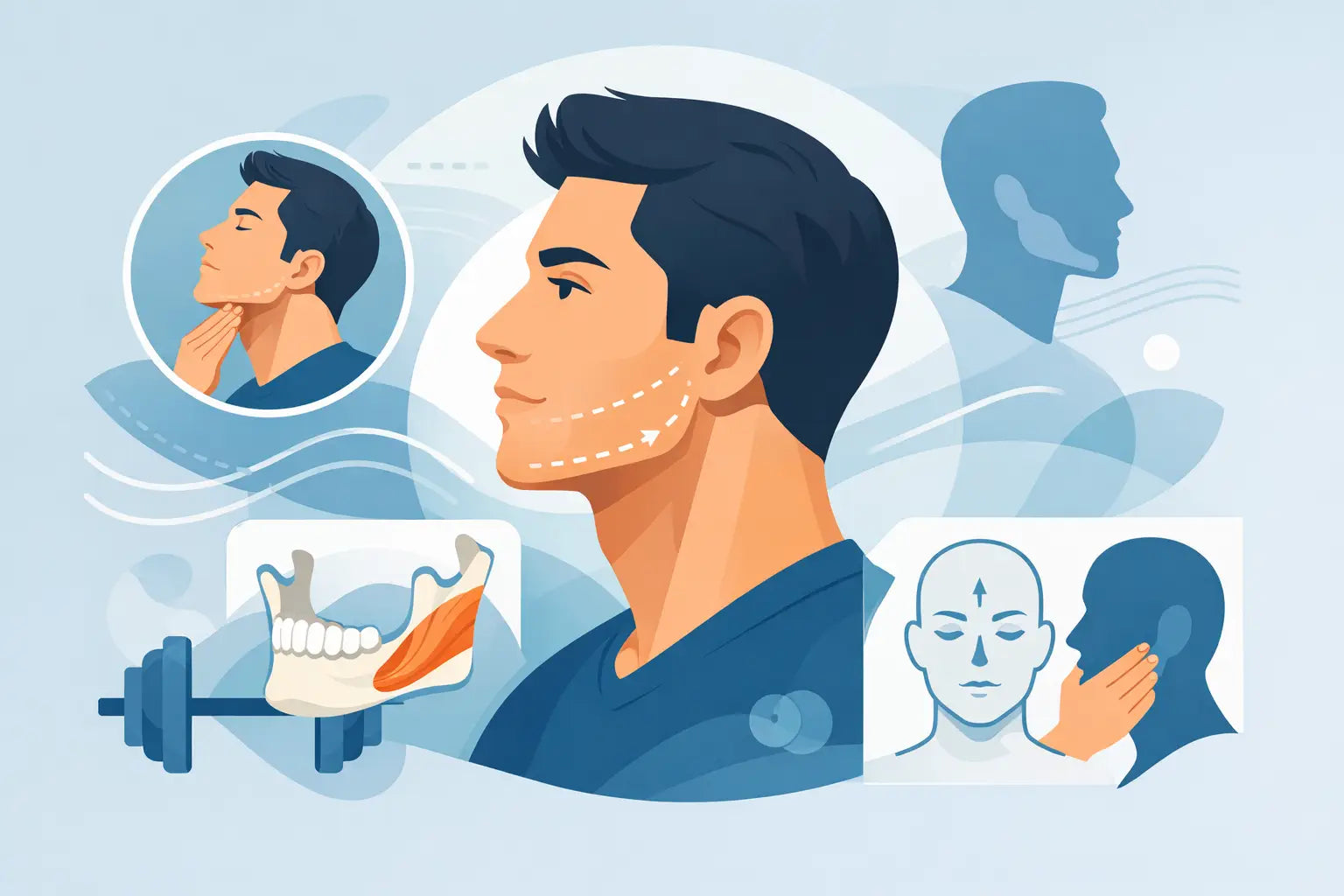


A stronger-looking jawline should feel like a controlled training goal, not a source of clicking, soreness, or headaches. So, can jaw exercises cause TMJ? They can contribute to jaw-joint symptoms when training is too aggressive, poorly controlled, or continued through pain. The bigger issue is usually not jaw exercise itself. It is overload: too much resistance, too much volume, too little recovery, or a routine that ignores what your body is telling you.
Like any muscle-focused routine, jaw training works best when progression is earned. You would not start leg day with the heaviest weight in the gym and repeat it every day. Your masseters deserve the same discipline.
Can Jaw Exercises Cause TMJ Symptoms?
First, a quick correction that matters. TMJ stands for temporomandibular joint, the hinge connecting your lower jaw to your skull. Everyone has TMJs, one on each side. When people say they "have TMJ," they often mean they have temporomandibular disorder, or TMD: pain or dysfunction involving the joint, jaw muscles, or surrounding tissues.
Jaw exercises do not automatically cause TMD. For many people, controlled chewing and jaw-muscle work are tolerated well. But repetitive, high-force clenching or chewing can aggravate an already sensitive joint or overwork the muscles around it. If you push hard through discomfort, the risk of symptoms rises.
That distinction is useful. The goal is not to fear training. The goal is to train with enough awareness to build consistency without turning a 10-minute appearance routine into a recovery problem.
Why Jaw Training Can Go Wrong
Your masseter is a powerful muscle, but your jaw is not just a muscle. It is a moving joint with a disc, ligaments, nerves, teeth, and muscles that must work together. Resistance creates a training stimulus, but it also creates demand on the entire system.
The most common mistake is treating resistance as the only measure of progress. Harder is not always better. A person who jumps straight into advanced resistance, chews for long sessions, or doubles up sessions to chase faster definition may create fatigue faster than their jaw can adapt.
Form also matters. Training while clenching your teeth aggressively, shifting the jaw side to side, or forcing a wide opening can put uneven stress through the joint. So can chewing only on one side. The muscle may feel like it is working, but an imbalanced pattern is not the same thing as productive training.
Then there is your baseline. Night grinding, chronic stress, frequent gum chewing, dental changes, recent dental work, a prior jaw injury, and existing clicking or pain all affect how much load your jaw can handle. Two people can use the same resistance for the same amount of time and have completely different responses.
The Difference Between Normal Fatigue and a Warning Sign
A mild, temporary muscle fatigue after a new jaw routine can happen, just as it can after any unfamiliar workout. It should be manageable, fade with rest, and not change how your jaw functions.
Pain is different. Sharp joint pain, recurring headaches, ear-area pain, locking, or a bite that suddenly feels different are not signs to "push through." They are reasons to stop the routine and take the signal seriously.
Watch for symptoms such as jaw pain during or after training, persistent tenderness near the joint, popping or clicking that comes with pain, reduced ability to open your mouth, jaw locking, facial pain, tooth sensitivity, or headaches that keep returning. A painless click is common and does not always mean injury, but new clicking paired with discomfort deserves attention.
If your jaw locks, you cannot open or close it normally, you have swelling, or pain is severe, seek prompt medical or dental care. For less urgent but persistent symptoms, a dentist, physician, or qualified TMJ-focused clinician can help identify whether the joint, muscles, bite, grinding, or another issue is involved.
Build Jaw Strength With Progression, Not Ego
The safest way to chase definition is the same way you build any visible muscle: start at a level you can control, keep your technique clean, and give your body time to adapt.
Start with lower resistance and short sessions, especially if you are new to resistance-based chewing. A short, comfortable session performed consistently beats an intense session that leaves your jaw irritated for days. Increase only one variable at a time: resistance, session length, or frequency. Do not raise all three in the same week.
Use a smooth, controlled bite rather than hard clenching. Keep your jaw moving in its natural path and distribute chewing evenly between both sides. Your shoulders and face should stay relaxed. If you catch yourself tightening your neck, grinding your teeth, or forcing each repetition, back off.
Recovery is part of facial fitness. Your jaw already works all day through eating, speaking, and unconscious habits like stress clenching. A dedicated routine needs to fit around that existing workload. If you wake up with a tight jaw from nighttime grinding, that may not be the day to add more resistance.
JAWLINER's beginner-to-expert approach is built around this principle: progression should follow tolerance, not impatience. Move up only when your current resistance feels controlled and symptom-free over time. Visible goals reward steady work, not reckless volume.
A Smarter Self-Check Before You Train
Before each session, take ten seconds to assess your jaw. Can you open and close comfortably? Does your bite feel normal? Is there tenderness around the cheeks, temples, or joint? Are you carrying stress in your face?
If the answer is no, make that day a rest day. Skipping one session does not erase progress. It protects your ability to train next week, next month, and long enough to make your routine count.
It also helps to avoid stacking jaw stress. If you have spent hours chewing regular gum, eaten an unusually tough meal, or noticed yourself clenching through a stressful workday, reduce or skip your planned resistance session. Training is about total load, not just the minutes spent with an exerciser.
Who Should Be More Careful With Jaw Exercises?
Some people should get individual guidance before adding resistance-based jaw training. That includes anyone with current jaw pain, locking, a history of TMD, frequent migraines or tension headaches, known nighttime grinding, significant dental concerns, recent oral surgery, orthodontic treatment, or a recent facial injury.
This is not about giving up on your appearance goals. It is about choosing the right starting point. A clinician may recommend treating a current issue first, modifying activity, or using a slower progression. That can feel less exciting than going straight for expert resistance, but it is the move that keeps a long-term routine possible.
There is also a cosmetic trade-off worth understanding. Training the masseters may make the lower face look stronger or wider for some people, but facial structure, body fat levels, genetics, posture, and overall muscle development all influence what you see in the mirror. Jaw exercise is a focused tool, not a guarantee of a specific face shape.
Train for Definition Without Ignoring Your Jaw
A defined jawline is built through disciplined habits, not by trying to overpower your anatomy. Keep your sessions controlled, respect recovery, and view discomfort as information rather than a challenge to beat. The strongest routine is the one you can repeat confidently, with a jaw that feels as good as it looks.